A Yemen LNG Piping Model Case Study
September 3, 2026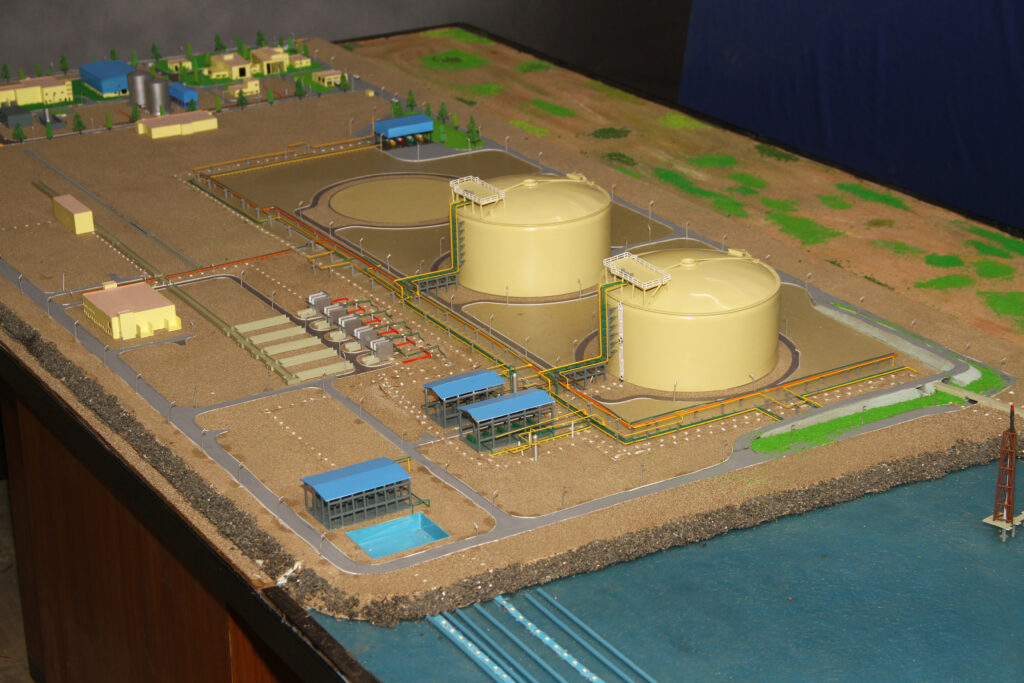
Why Color Matters in Industrial Scale Models
When you look at an industrial scale model, colour is one of the first things you notice.
But colour is not just about making a model look attractive. In a well-designed industrial scale model, colours help people understand different equipment, piping systems, buildings and areas quickly.
For a complex factory or plant, this can make a big difference.
Colour Helps Explain Complex Projects
Industrial facilities can contain hundreds of components—process equipment, pipelines, tanks, structures, roads and utility systems.
If everything looks the same, it can be difficult to understand the layout.
A well-planned colour scheme creates visual separation and helps viewers identify different parts of the project at a glance.
This is particularly useful for:
- Factory layout models
- Plant models
- Piping models
- Engineering models
- Training models
- Exhibition models
Colour Coding in Piping Models
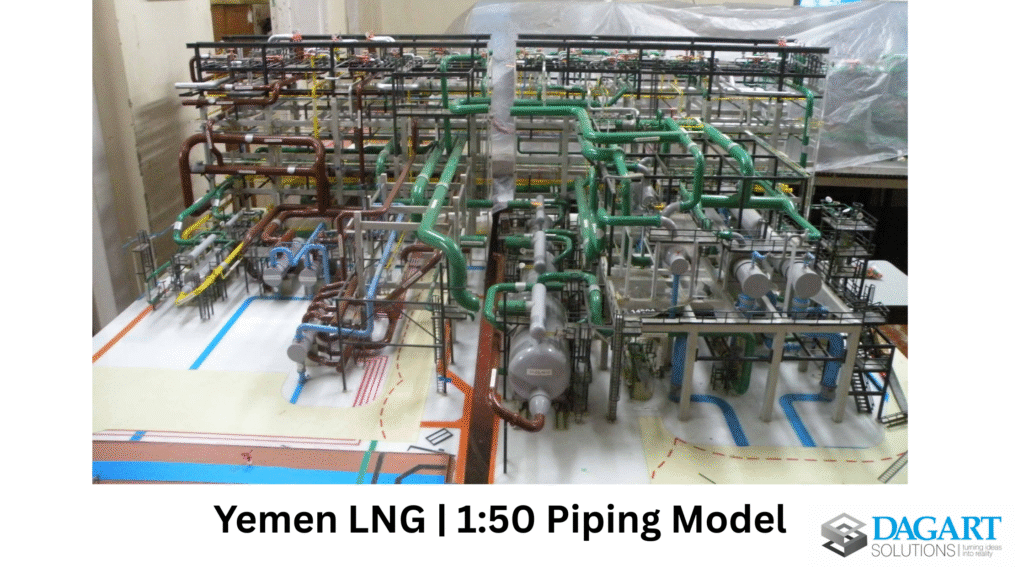
Piping is one of the areas where colour can be especially useful.
Different colours can help viewers distinguish between various services and systems. For technical projects, the colour scheme should be based on client specifications, project drawings and applicable standards, rather than assuming that the same colours apply to every plant.
The purpose is simple: make complex systems easier to understand while maintaining technical accuracy.
Colour Can Highlight Important Equipment
Sometimes a project has certain equipment or areas that need more attention.
A different or contrasting colour can help highlight:
- Major machinery
- Storage tanks
- Reactors
- Turbines
- Compressors
- Production units
- Key process areas
This is particularly helpful during management presentations, exhibitions and technical discussions.
Colour Makes Large Models Easier to Understand
Imagine viewing a large factory model from a few feet away.
You may not be able to see every pipe or component, but you can quickly identify the buildings, roads, equipment and different systems because of their colours.
That’s the real value of colour.
It helps the viewer understand the bigger picture before looking at the smaller details.
Should a Model Follow the Actual Plant Colours?
Not necessarily.
A scale model is a communication tool, so colours may sometimes be adjusted to improve visibility and presentation.
However, technical accuracy should always come first.
Before finalizing colours, professional model makers should consider:
- Client requirements
- Engineering drawings
- P&IDs
- Project specifications
- Applicable standards
- Purpose of the model
The right approach is to find a balance between technical accuracy and visual clarity.
Common Colour Mistakes
A few simple mistakes can reduce the effectiveness of an industrial model:
- Using too many colours
- Ignoring client specifications
- Relying only on colour without labels
- Using colours with poor contrast
- Choosing colours only for appearance
- Not considering exhibition or lighting conditions
How We Approach Colour at Dagart Solutions
At Dagart Solutions, colour selection is considered during the planning stage of an industrial model.
We review the client’s drawings, specifications and requirements before finalizing the colour scheme.
Depending on the project, we consider equipment, piping, structures, buildings, roads, landscaping, safety markings and labels.
The objective is not simply to make the model colourful.
It is to make the model easier to understand.
Final Thought
In industrial model making, colour is information.
The right colour scheme can guide the viewer’s attention, separate complex systems and make a large project much easier to understand.
Whether it is a factory layout model, plant model, piping model or engineering model, thoughtful colour selection can make the difference between a model that simply looks good and one that effectively communicates the project.
A good industrial scale model doesn’t just show a project. It helps people understand it.